
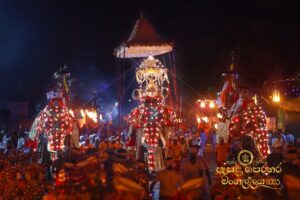




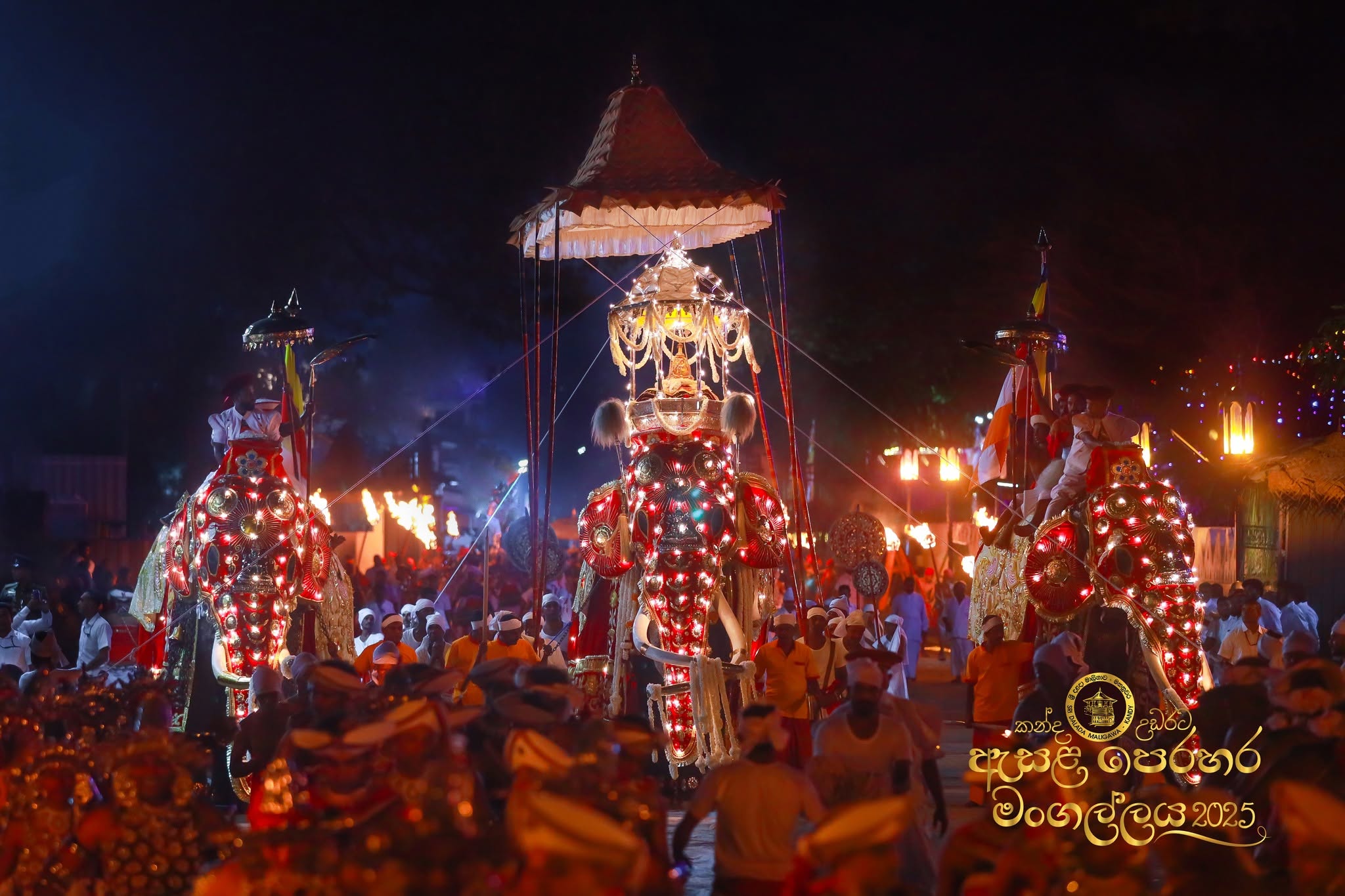
The Kandy Esala Perahera is the greatest spectacle Sri Lanka produces — ten nights when the hill capital fills with drummers, whip-crackers, fire dancers, Kandyan dancers in silver regalia, and lavishly dressed tuskers walking streets carpeted in white, all in honour of the Sacred Tooth Relic of the Buddha kept at the Temple of the Tooth. It has been performed in some form for well over a thousand years, and no photograph prepares you for the sound of it: hundreds of drums echoing off the colonial facades of Dalada Veediya while the procession takes hours to pass a single point.
It is also, without planning, one of the most exhausting nights of any Sri Lanka trip — hundreds of thousands of people, closed roads, and pavement spots claimed five hours before the first whip cracks. This guide covers what the Perahera actually is, when it happens, and — the question we’re asked most — how the ticket and viewing system really works.
When is the Kandy Esala Perahera?
There is deliberately no fixed date. The festival follows the lunar calendar, running across the Esala season — generally late July into August — and building to its climax on the Nikini full moon (Poya), followed by the day perahera and the water-cutting ceremony at Getambe. Exact dates are announced each year by the Temple of the Tooth; check the official Sri Dalada Maligawa announcements before booking travel.
For 2026, the Perahera runs 18th to 28th August, with the Randoli nights from 23rd to 27th August.”
Update annually: check the official Perahera website Sri Dalada Maligawa.
What happens across the ten nights
The Perahera is really five processions in one — from the Temple of the Tooth and the four devales (shrines) of Natha, Vishnu, Kataragama, and Pattini — and it grows night by night:
- Kumbal Perahera (first five nights): the “smaller” processions — still magnificent, noticeably less crowded, and the best value for families with children or anyone who wants breathing room.
- Randoli Perahera (final five nights): the festival at full power — more dancers, more drummers, more elephants, more fire. Each night outgrows the last.
- The final Randoli night (Poya): the maximal version, and the night the whole country wants to attend. This is when the casket of the Sacred Tooth Relic travels on the Maligawa tusker under escort of the entire procession. Book earliest for this night; expect the biggest crowds of your life.
- The day perahera and water-cutting conclude the festival the following day — a different, gentler experience worth seeing if you’re still in Kandy.
Local honesty: if you can’t get final-night seats, the second- or third-last Randoli night delivers 95% of the spectacle with meaningfully less crush.

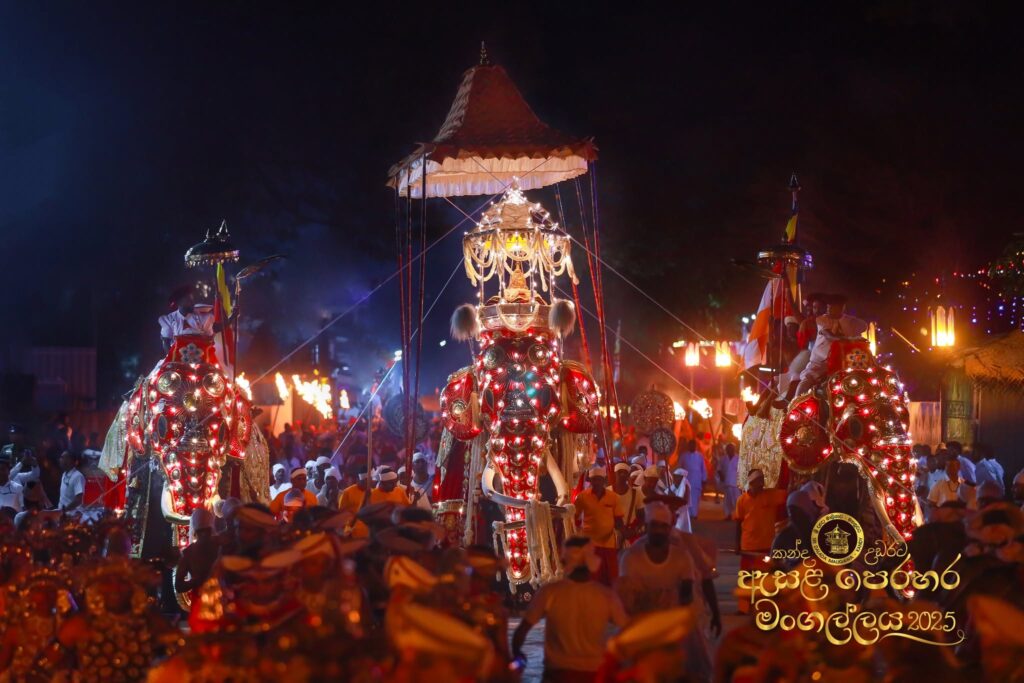
Free viewing vs gallery seats — the honest comparison
Free roadside viewing is completely possible and thousands do it every night. The reality: prime pavement spots along the route fill 3–5 hours before the procession, you’ll sit on the ground packed shoulder-to-shoulder, leaving for a toilet forfeits the spot, and once the crowd stands, children and shorter adults mostly see backs. It’s free, it’s atmospheric, and it’s a test of endurance.
Paid viewing galleries — tiered or balcony seating arranged along the route in front of shops, hotels, and buildings — are what transform the night, especially for families, older visitors, and photographers. You arrive an hour before, sit on an actual chair, keep your spot, and watch the full procession pass at eye level. For most visitors flying in for this once, the seat is the difference between attending the Perahera and actually seeing it.
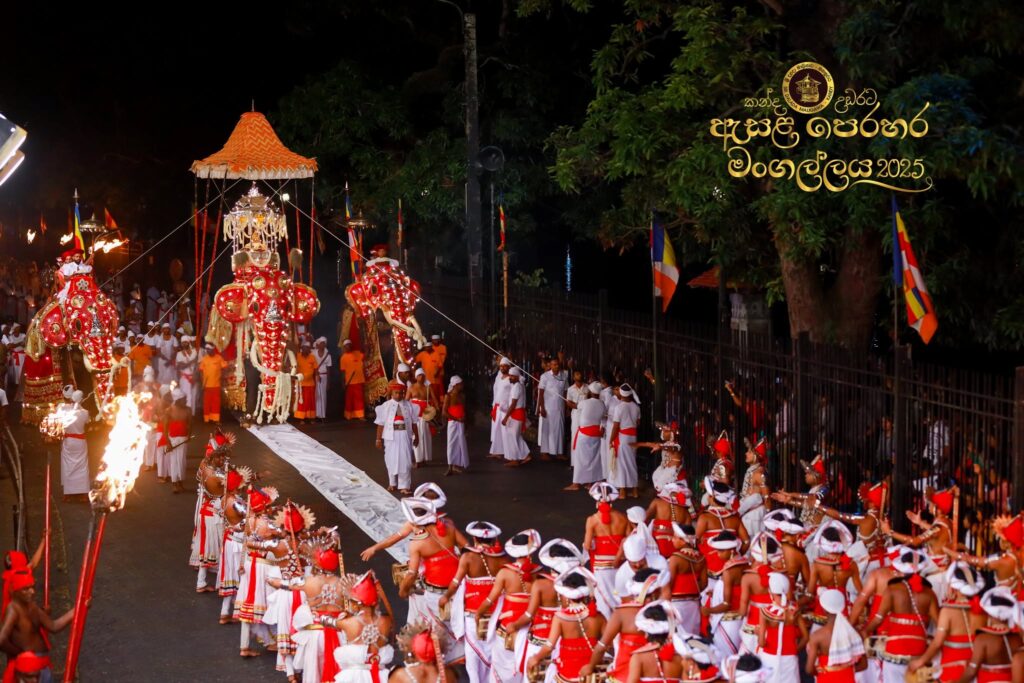
How to buy Kandy Esala Perahera tickets safely
There’s no single official “Perahera ticket” — galleries are operated by various establishments along the route and sold through several channels. What matters is buying from a legitimate seller and knowing what you’re buying:
Where to buy:
- Established online ticketing platforms — e-ticket platforms such as MyTickets.lk list Perahera viewing galleries each season with seat categories, route locations, and instant e-tickets, which solves the biggest problem for overseas visitors: booking verified seats before you arrive.
- Kandy hotels along the route — hotels on the procession route sell balcony/restaurant packages, often bundled with dinner. Priciest option, most comfortable.
- Reputable tour operators — convenient if the Perahera is part of a package tour; verify the actual seat location.
Before you pay, always confirm:
- The exact location on the route — ask for the street and building, and check it against the route map. “Route view” can mean front row on Dalada Veediya or a distant corner.
- Which night — Kumbal vs Randoli pricing differs enormously; final nights command the highest prices. Make sure the ticket names the specific date.
- Row and elevation — ground-level front rows put you closest to the fire dancers; upper balconies give photographers clean sightlines over the crowd.
- What’s included — some galleries include water/refreshments and toilet access; many don’t. Ask.
- E-ticket or physical collection — for foreign visitors, instant e-tickets remove the arrival-day scramble.
The scam warning that earns its place: every season, street touts around Kandy sell fake or duplicate “gallery tickets” to visitors on procession nights. If someone approaches you on the pavement with tonight’s tickets, walk away — buy only through the channels above, in advance.
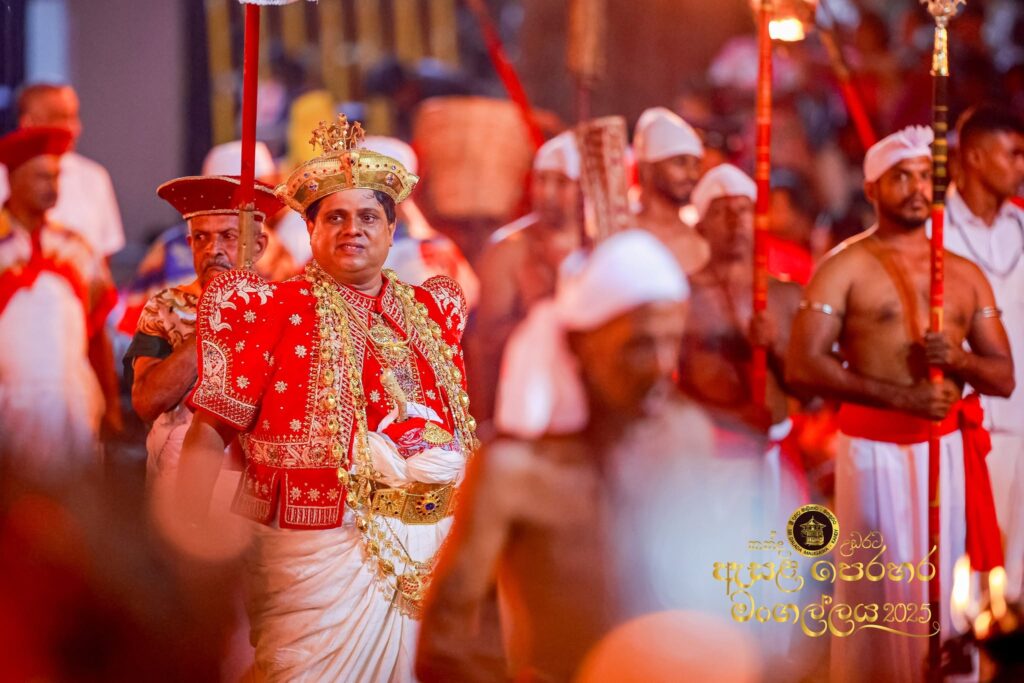
Practical survival notes
- Be seated by ~6 pm — processions typically begin early evening and roads close well before; Kandy’s traffic on Perahera nights is its own festival.
- Dress respectfully — this is a sacred religious event, not a carnival: shoulders and knees covered is the safe standard. Remove hats as the relic casket passes; locals around you will cue you.
- Bring: water, a light rain layer (August showers happen), patience, and a power bank. Leave large bags at your hotel — security checks are everywhere.
- With children: choose a Kumbal night or an early Randoli night, book gallery seats, and sit near an exit row.
- Stay in Kandy that night. Post-Perahera transport out of the city is a legend of its own; book accommodation months ahead for the final week.
- A note on the elephants: the tuskers are central to the tradition, and we know some international visitors have questions about animal welfare at cultural events. It’s a genuine, ongoing conversation within Sri Lanka too. We’d rather acknowledge that honestly than pretend the question doesn’t exist — attend informed, and draw your own conclusions.
FAQ
How long does the procession take to pass? Two to three hours past any fixed point on the big nights — settle in.
Can I photograph it? Yes, from your spot — no flash at close range, and never step into the procession route.
Is one night enough? Yes. One well-chosen Randoli night with a decent seat is the full experience.
What if it rains? The Perahera proceeds in almost all weather. Bring the rain layer; the drummers won’t stop and neither should you.
Is Kandy worth extra days around the Perahera? Absolutely — the Temple of the Tooth by day, the lake, and the hills around the city (Hanthana) fill the daylight hours perfectly. See our wider Sri Lanka planning guides at srilanka.travel and our own hiking and Ella guides for combining Kandy with the hill country.
Dates and gallery arrangements change each season — this guide is updated annually after the official announcements.
Last updated July 2026.